Reticule (suspend) (2025)
Sound installation with 114 kinetic glass slides and piezos
The word ‘reticule’ shares the root with ‘retina’, coming from Latin ‘rete’ for a fine network. A grid of fine lines, such as the cross-hair printed on the lens of telescopic gun sights, for which the term is used. This work began when I received an antiquity, a block of wood with an approximately square surface, into which a grid of small brass crosses had been set, alternating between individual elements and groups of four (a cross of crosses). I experimented with small glass slides that could be placed in various positions, sticking the slides between the metal teeth. I have always been fascinated by glass as a material and the optics of glass and glass lenses. During a residency, I had worked in a planetarium and made a composition for sound and the stars generatively created by a Zeiss optical projector. Companies that make optics also equip war machines such as tanks.
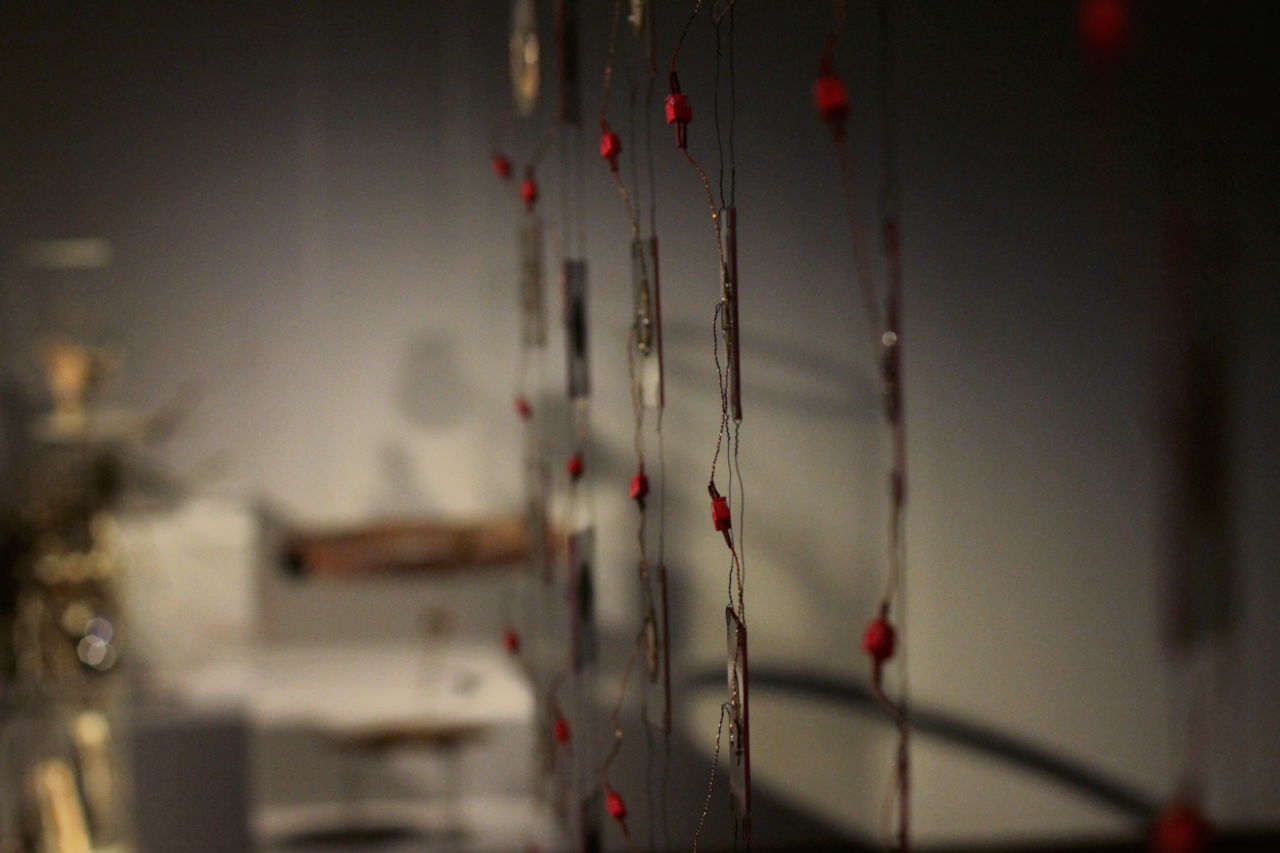
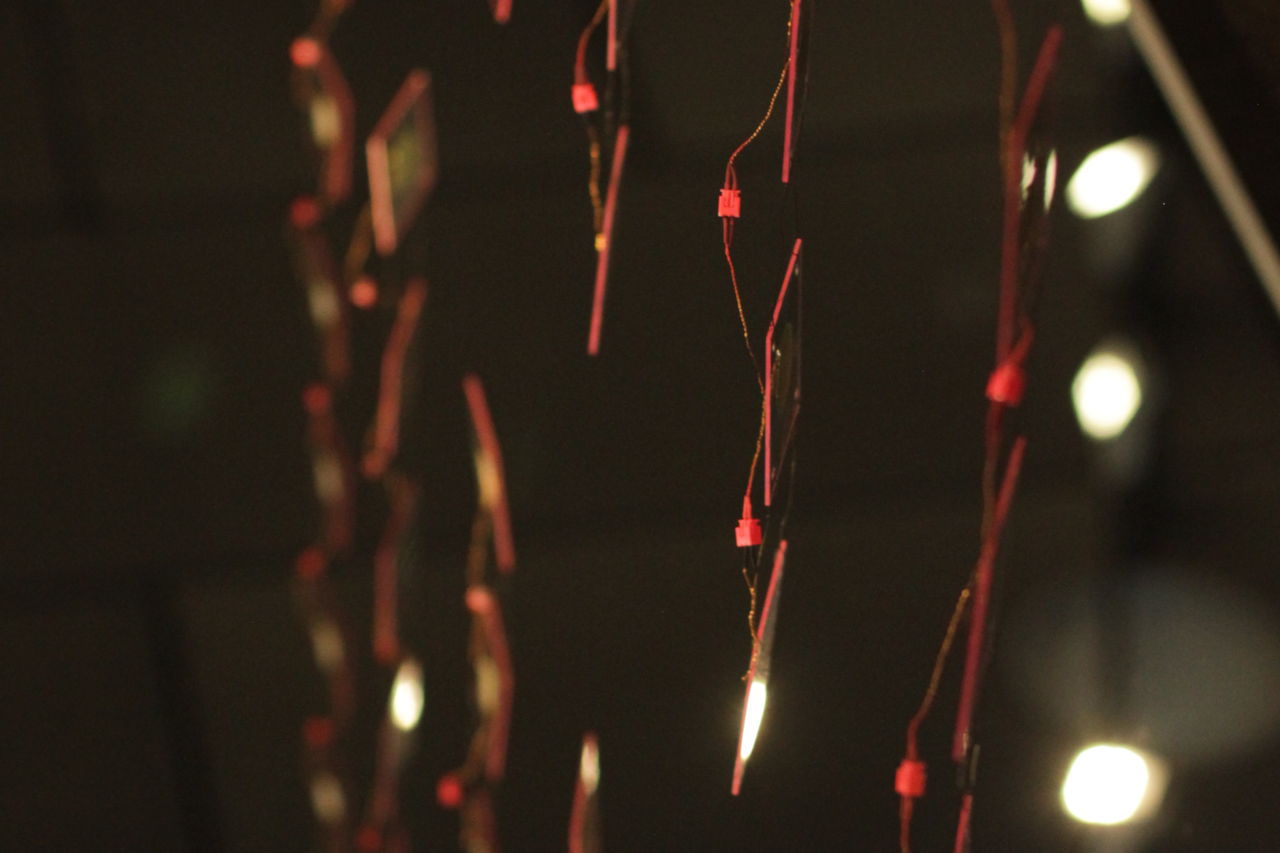
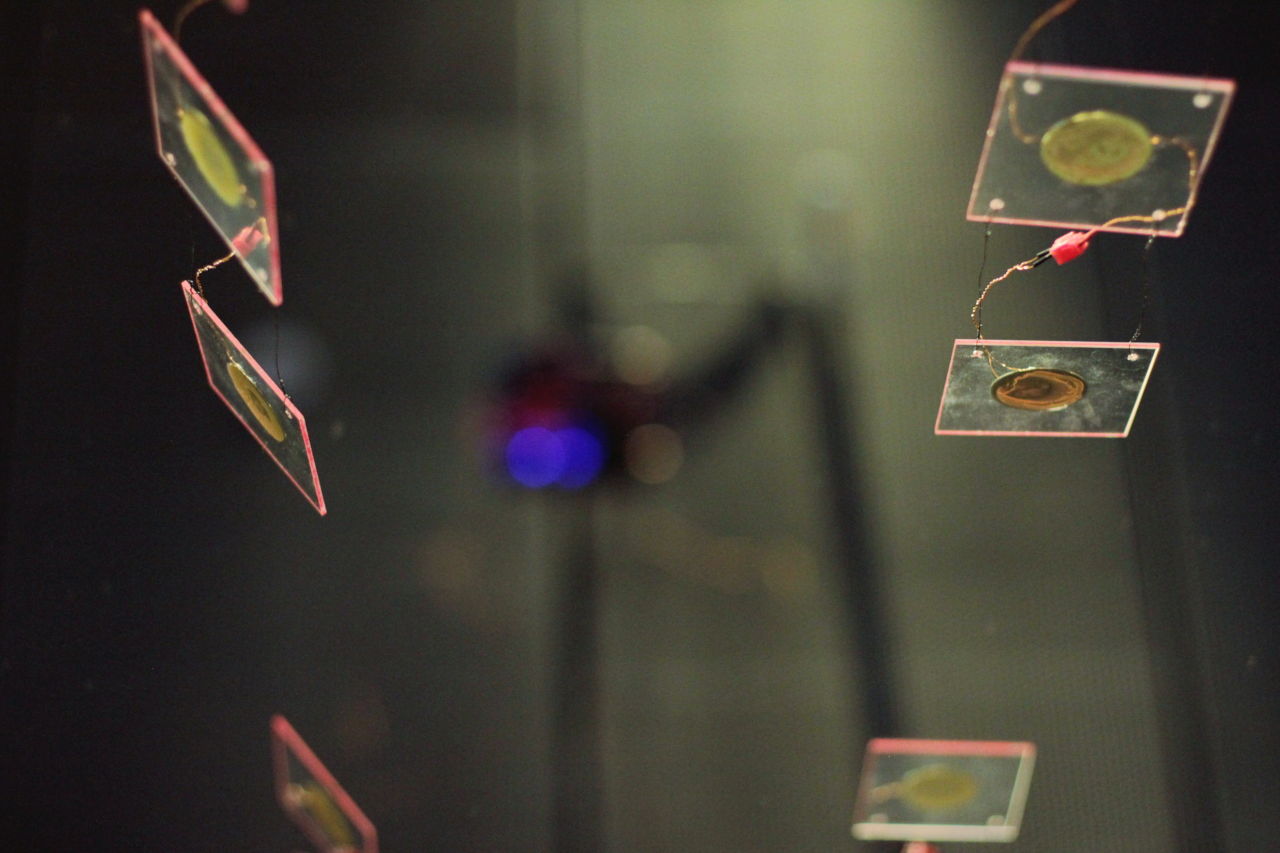
Yet, the small glass slides seem like an antithesis to the heavy metal structures of war machines. They may remind one of specimen slides used in biology or chemistry. Glass is full of wonderment, from its genesis as compressed sand (deliberately or as a side-effect due to a nuclear explosion) to its property of translucency to its fragility, and most of all, its sonic properties. Who does not love the sound of shattering glass? It is a sound almost anticipated when seeing a glass object. There is also the sound of scraping glass which reveals its sandy origin. And there is the possibility of electromechanical excitement, through a transducer or even just a tiny piezo-ceramic element. The glass slides and the piezos seem a balanced match, small and inconspicuous, faint in volume and reduced in frequency range. Only soft sounds of insectoid frequency bands can be created, so if one wanted to create a sound piece, one would have to rely on the audience trying to be still and listen, and relying on an environment that is quiet.
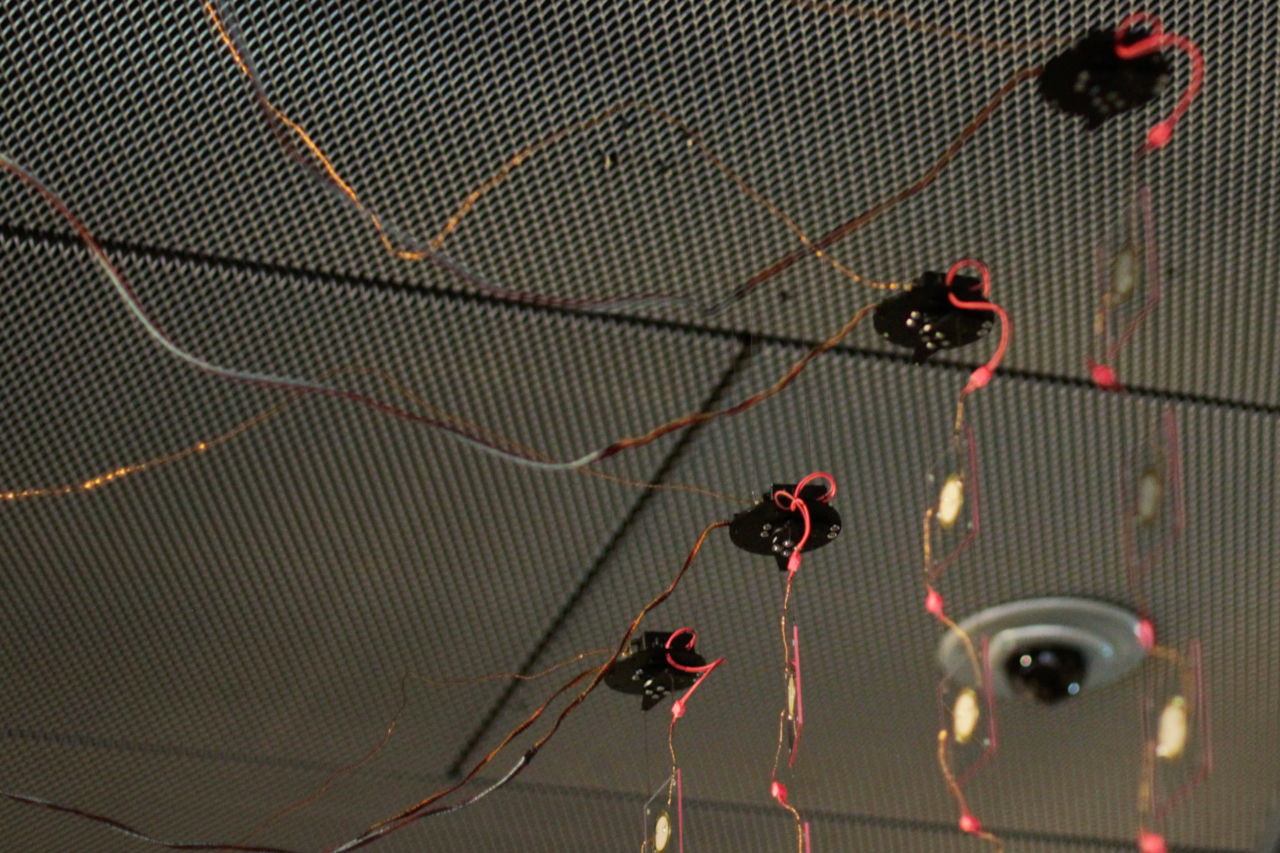
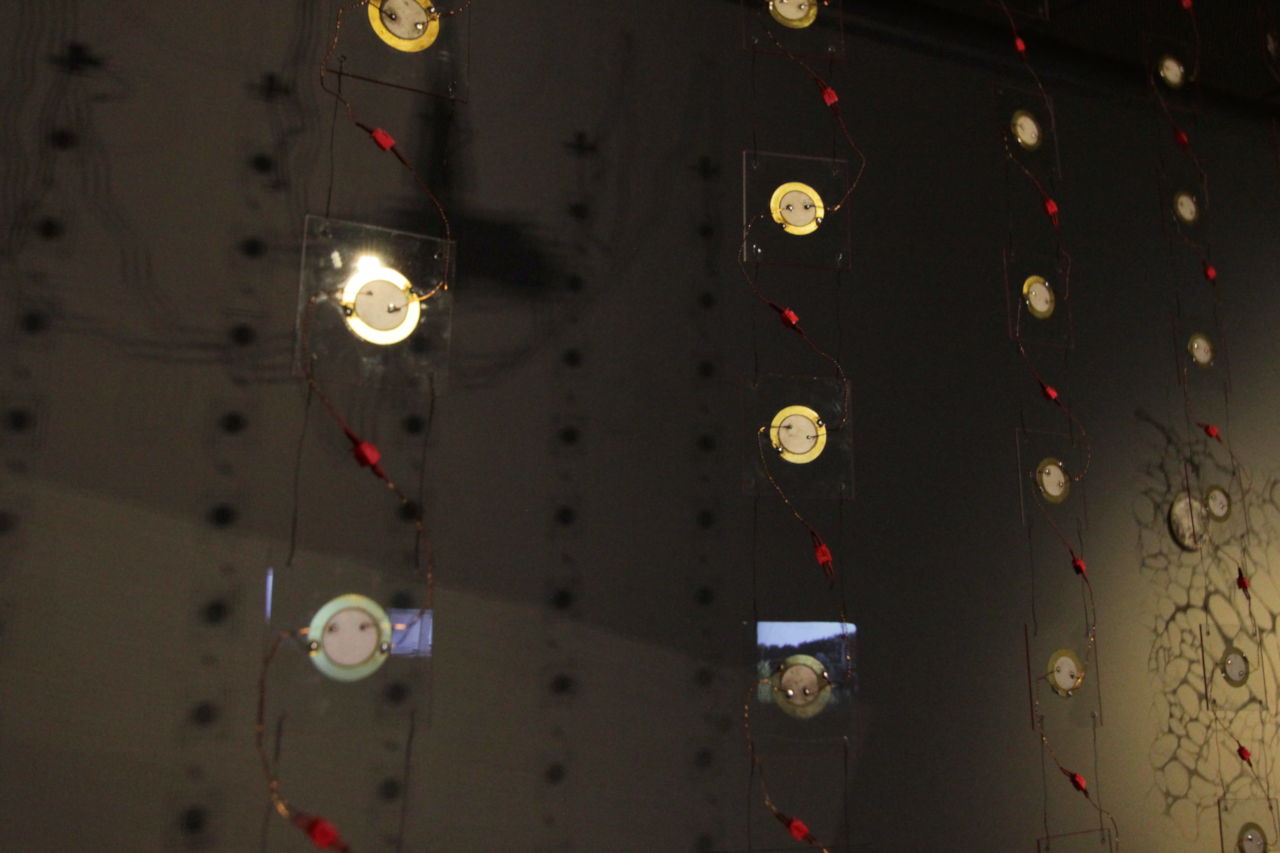
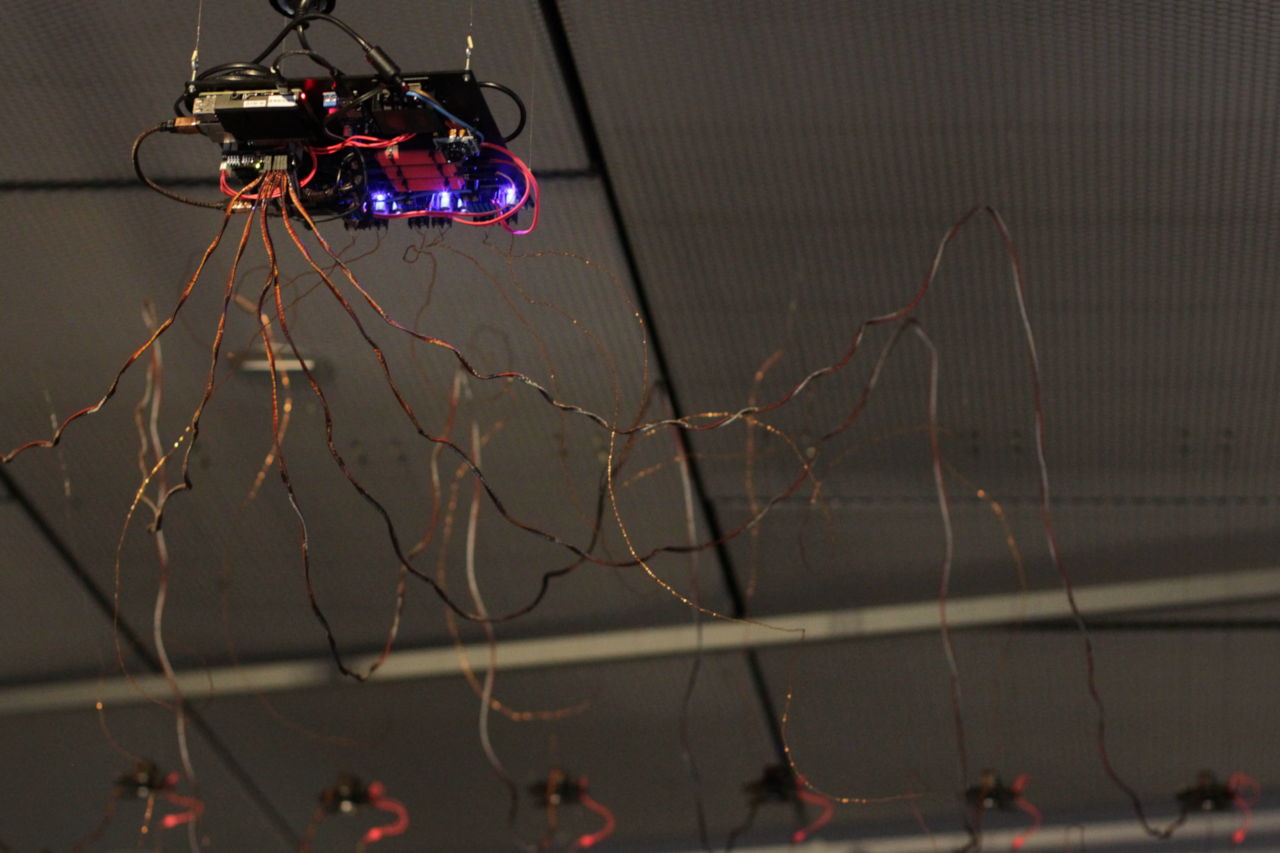
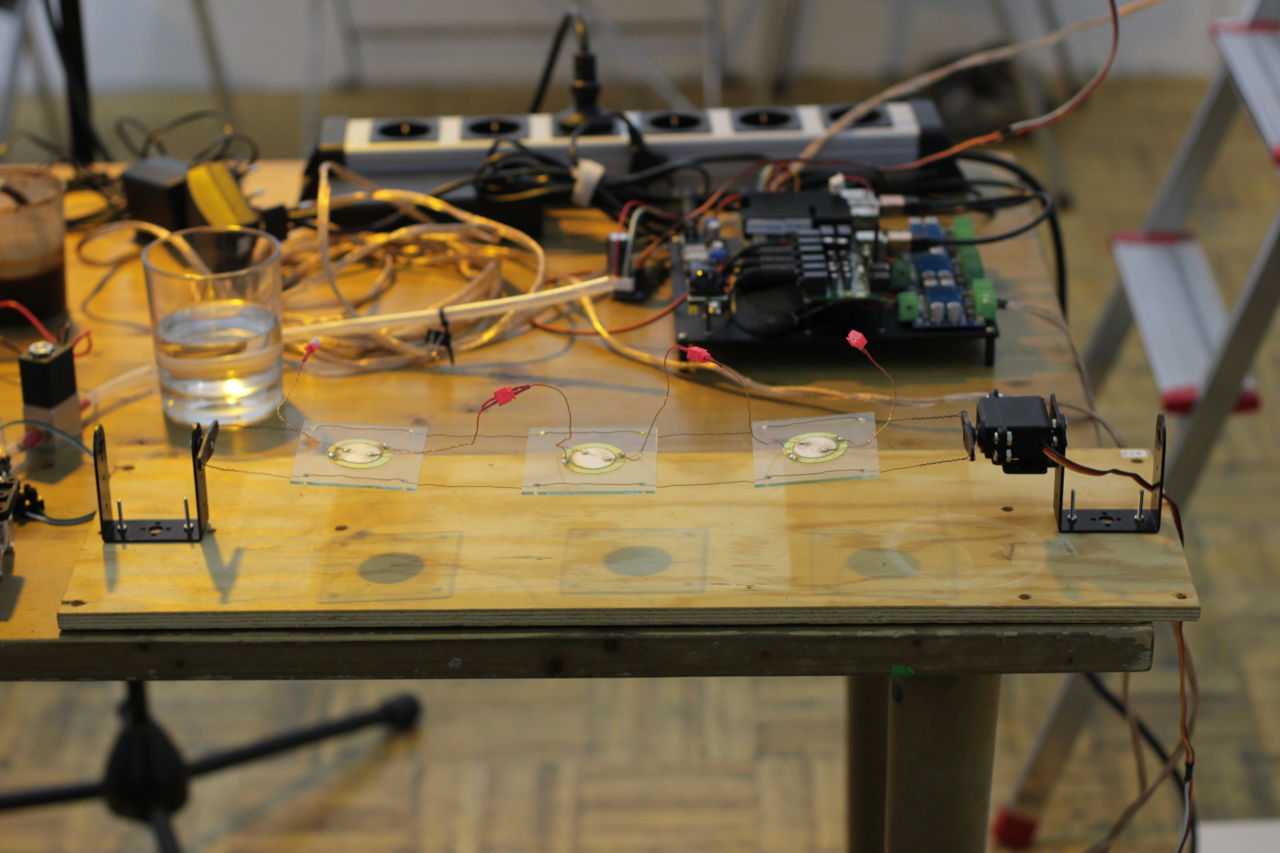
The ‘reticules’, as I prefer to call them in the plural, can take different forms and remain an open-ended work; they became like a ‘field kit’ during the third interval of the simularr artistic research project, as the set of a hundred-some glass slides with piezos and short connecting wires sat in two aluminium carrying cases that could be taken to our working sites. A third case contained a ‘node’, a custom built board with miniature computer, small blue illuminated audio amplifiers and interfaces.
Kinetic excitement and interaction with the video pieces at Neue Galerie
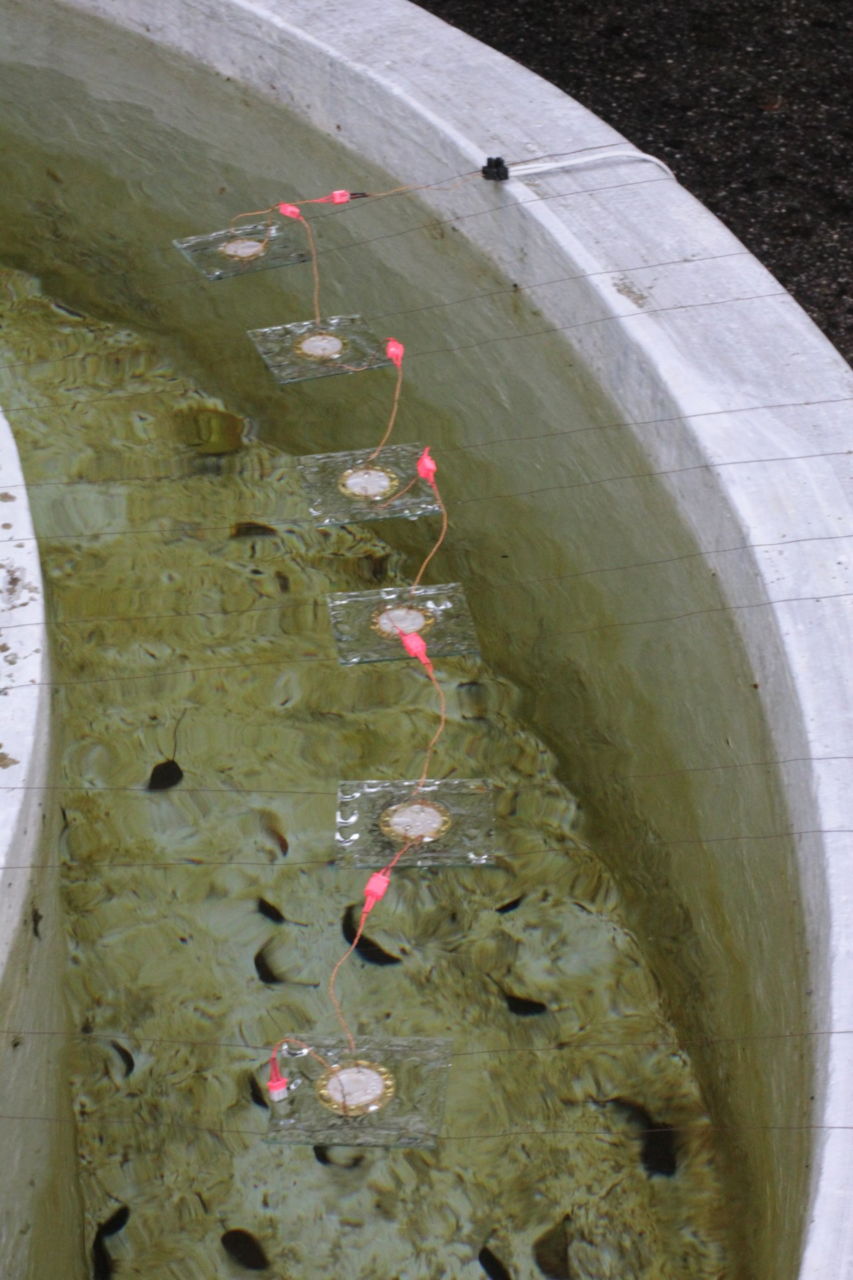
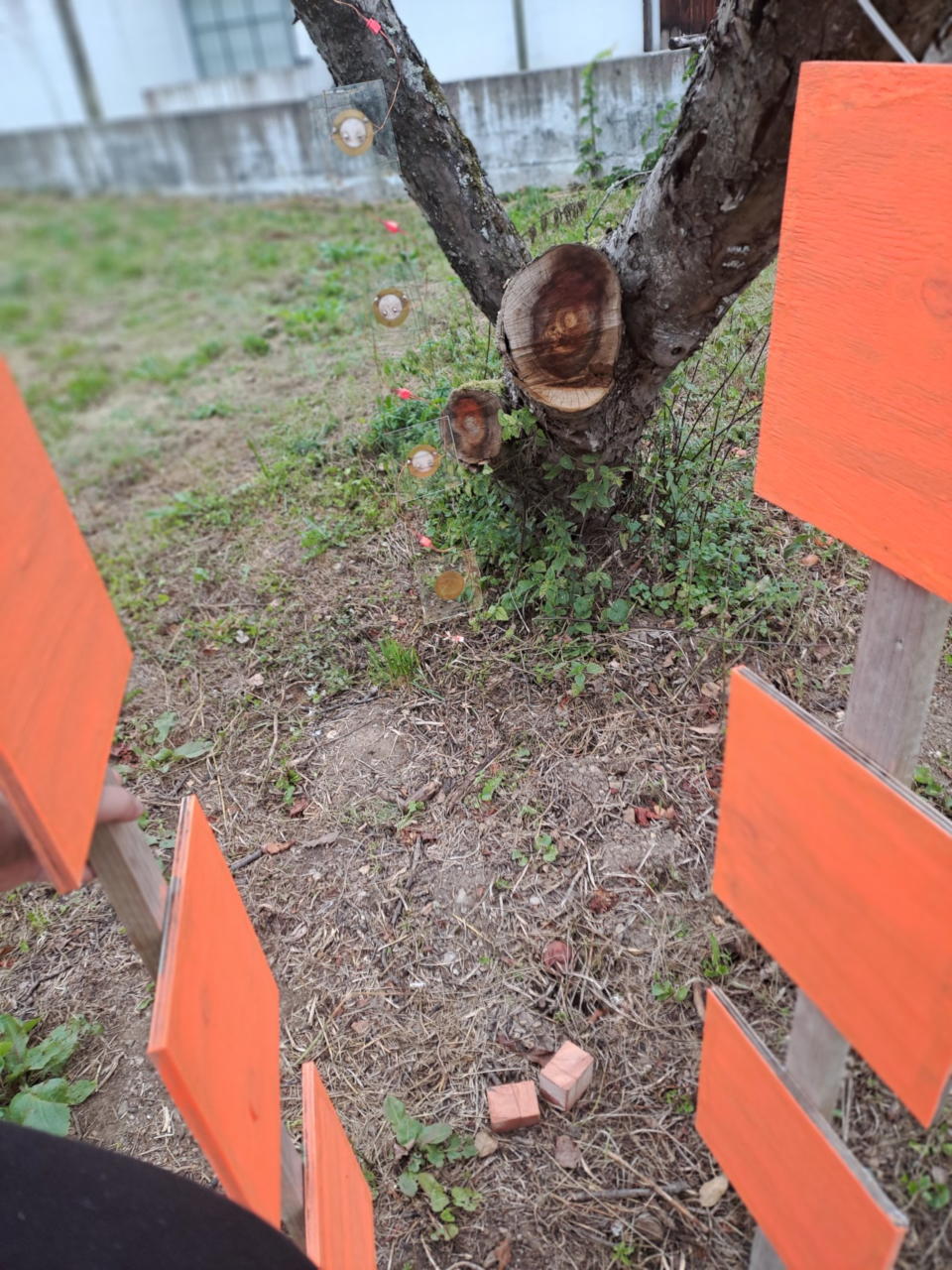
The ‘reticules’ could form various arrangements around the garden at Hoke Werkhaus, probing their vicinity to water, leaves, bricks, trees, ants; probing the sounds that others made. Being outside seems the reticules’ natural habitat, whereas in the inside spaces they ask for a stronger presence in themselves.
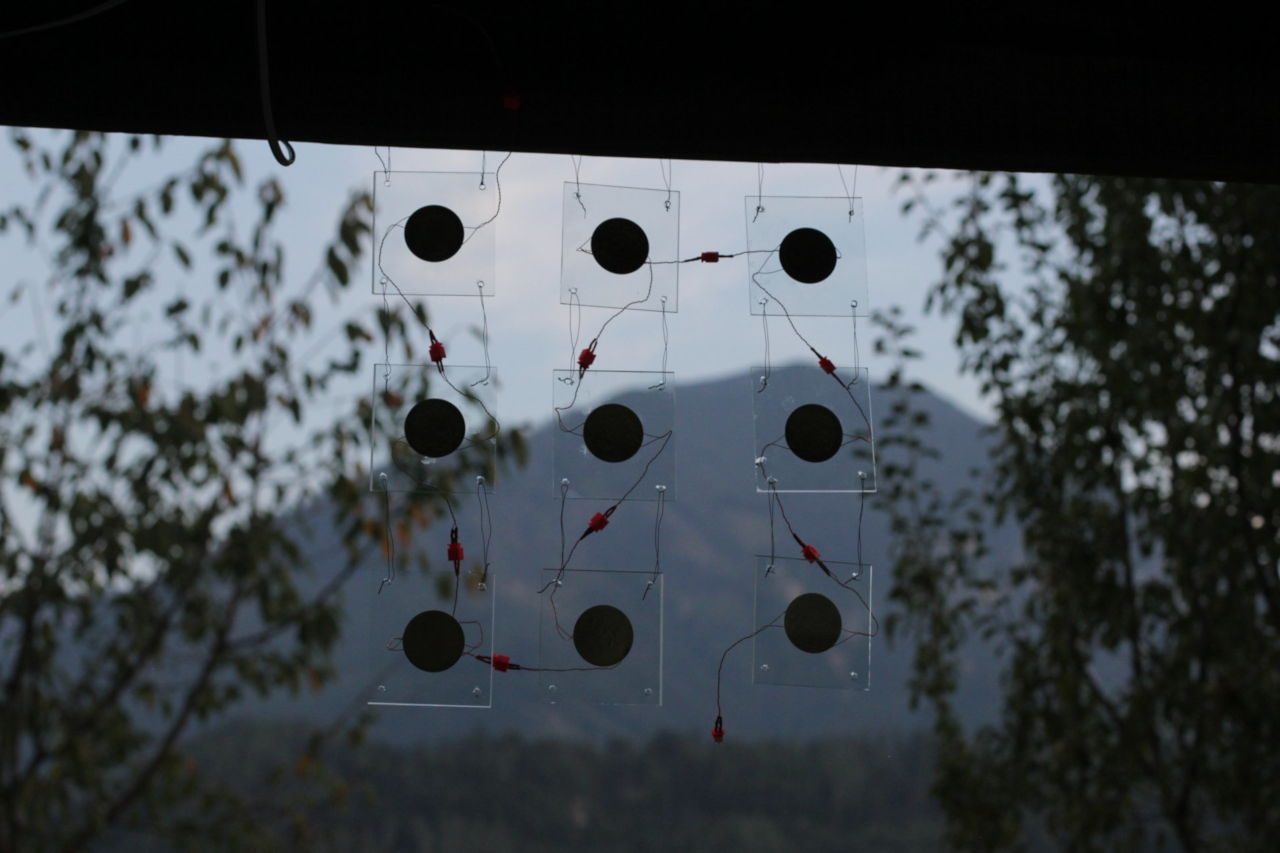
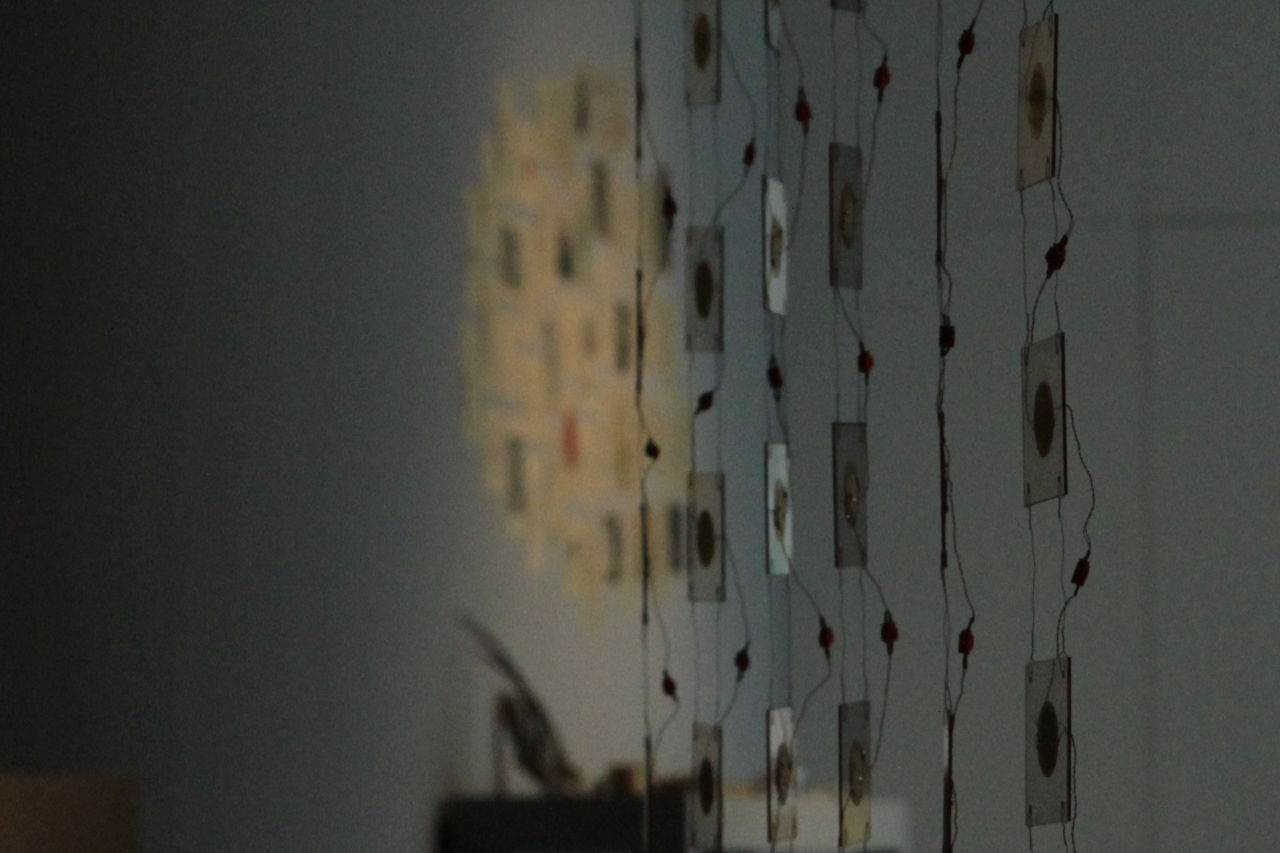
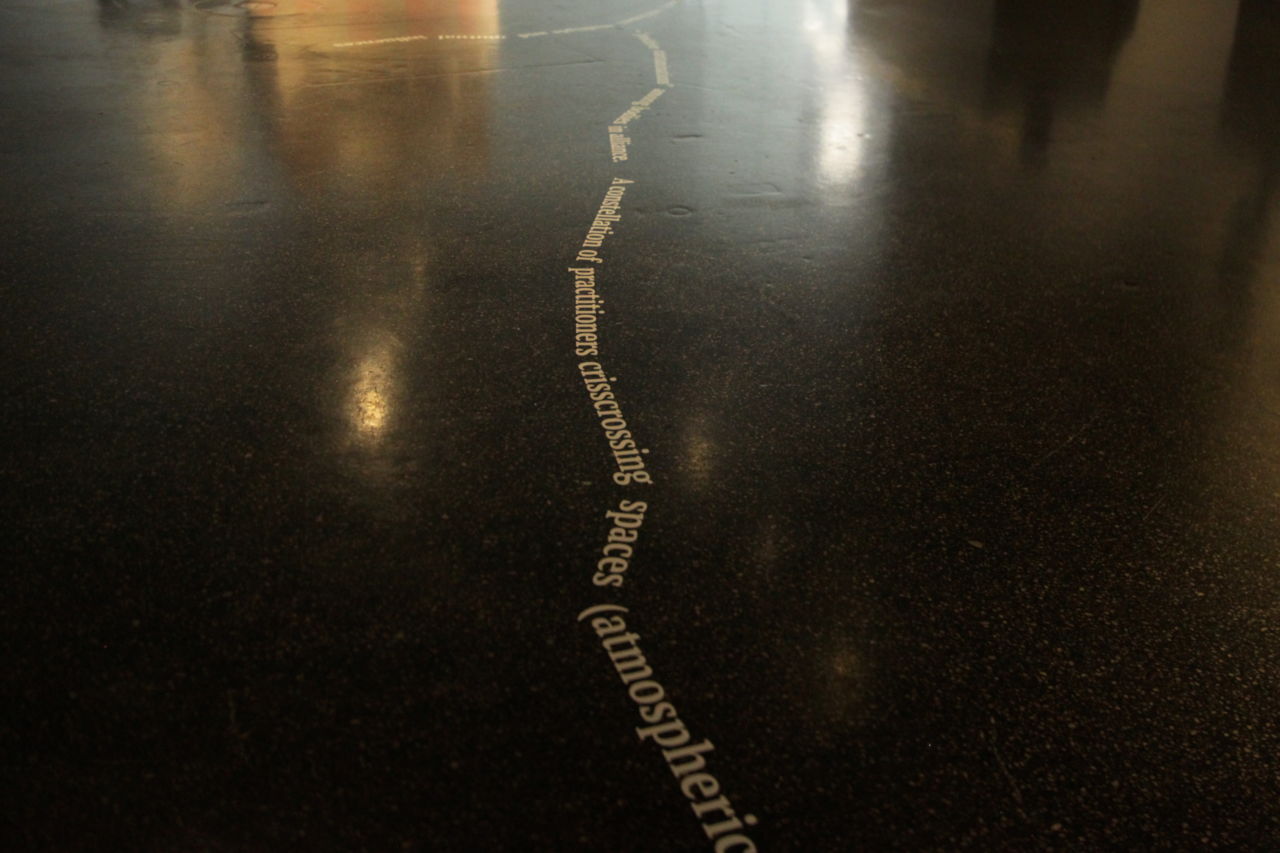
At Neue Galerie Graz, where Reticule (suspend) was shown in 2025, the work forms a suspended rug of six horizontal arms of nineteen vertical elements with the ability to combine their individual faint sonic capabilities to claim a stronger voice. What is missing in the gallery is the rain that makes the iron wires oxidate, leaving rust coloured traces on the glass, the wind that sometimes moves them with a frightening force, the tiny insects and leaves that touch it. What the gallery allows is a more refined spatial articulation; here, I am revisiting, that is de- and re-composing electroacoustic pieces of the album ‘Shouldhalde’ whose genesis ran in parallel to the timeline of simularr.
Reticule (suspend) (recording excerpt)
It is a transposition of the situation that was created on the rooftop of our Italian retreat during simularr’s second interval, which also began with these materials, before they were combined with whispering voices. The small glasses demand a particular dynamic, which is the compositional work done for this new constellation, working out the spatial image and its movement across the arms of the installation, and perhaps as a reverence for the wind, the modulation of the angle of each arm—and therefore the sonic diffusion pattern—by means of small motor movement.
Further Links
- Documentation on the Research Catalogue.